I am an assistant professor in the departments of International Relations and European Studies (European Forum) at the Hebrew University of Jerusalem. My research as a modern historian focuses on the circulation of ideas, particularly racial and nationalistic ones, between Britain and Central Europe from the mid-nineteenth century onward, as well as on the development of humanitarian advocacy. Within this framework, my publications have explored various aspects of British and central European intellectual, cultural and diplomatic history.
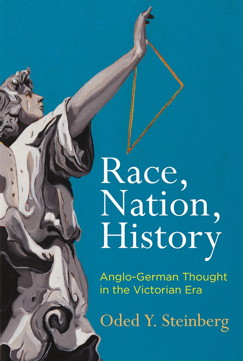
My book Race, Nation, History: Anglo-German Thought in the Victorian Era (Penn: University of Pennsylvania Press, 2019) examines the way a series of nineteenth-century scholars in England and Germany first constructed and then questioned the periodization of history into ancient, medieval, and modern eras, shaping the way we continue to think about the past and present of Western civilization at a fundamental level. The book explores this topic by tracing the deep connections between the idea of epochal periodization and concepts of race and nation that were prevalent at the time, especially the role that Germanic or Teutonic tribes were assumed to play in the unfolding of Western history.
Following my first book, I further developed my research on historical periodization the division of historical time into periods. In this line of inquiry, I explore the various meanings of periodization from a wide range of theoretical, geographic, and chronological perspectives
One concept that I devised is the “time border,” which critically reflects and challenges the reliance on conventional periodizations as organizing principles in the study of history. Rather than referring to a distinct line that marks the definitive end of one period and the beginning of the next, this concept emphasizes shifts between periods that incorporate both continuities from the past and changes in the present. A case in point is the alleged watershed of 1989, which, considering contemporary tensions between the West and Russia, appears less definitive in hindsight. “Time borders,” thus, uncovers layers of the historical narrative by drawing attention to the multiplicity and diversity of potential periodizations.
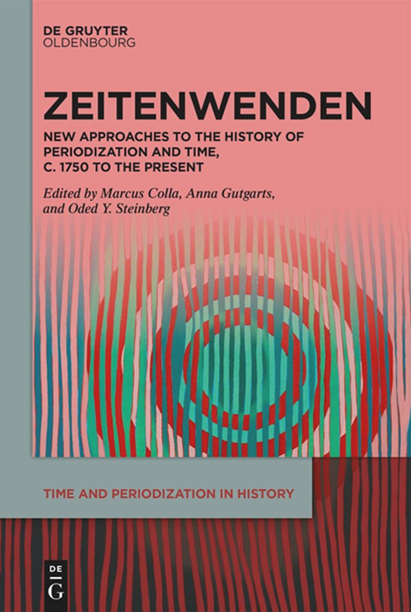
In connection to this research, I am the founding editor of a book series at De Gruyter -Brill titled “Time and Periodization in History.” Thus far we have published four books in the series. The fifth volume: Zeitenwenden: New Approaches to the History of Periodization and Time, ca. 1750 to the Present, which I co-edited with Marcus Colla and Anna Gutgarts, was published in 2026. This volume is the outcome of research and workshops I held with my colleagues, supported by DAAD grants awarded by the Cambridge and Jerusalem Centers. Recently, related to this theme and to a grant I received, we organized a conference at the Freie Universität Berlin titled “Periodization and Time in History: The Global View,” which included more than 40 participants.
Also building on my first book, which examined shared racial and religious ideas among a group of nineteenth-century Anglo-German scholars, I expanded my research to consider how some of these figures perceived the East, particularly the minorities living under the Ottoman Empire. This line of inquiry led to my current project, which offers a new perspective on the history of humanitarianism by investigating how racial and religious ideas shape forms of humanitarian advocacy. Supported by an ISF grant, the project explores the activities and ideological foundations of little-known Western networks that advocated on behalf of Christian Armenians during the final decades of the nineteenth century.